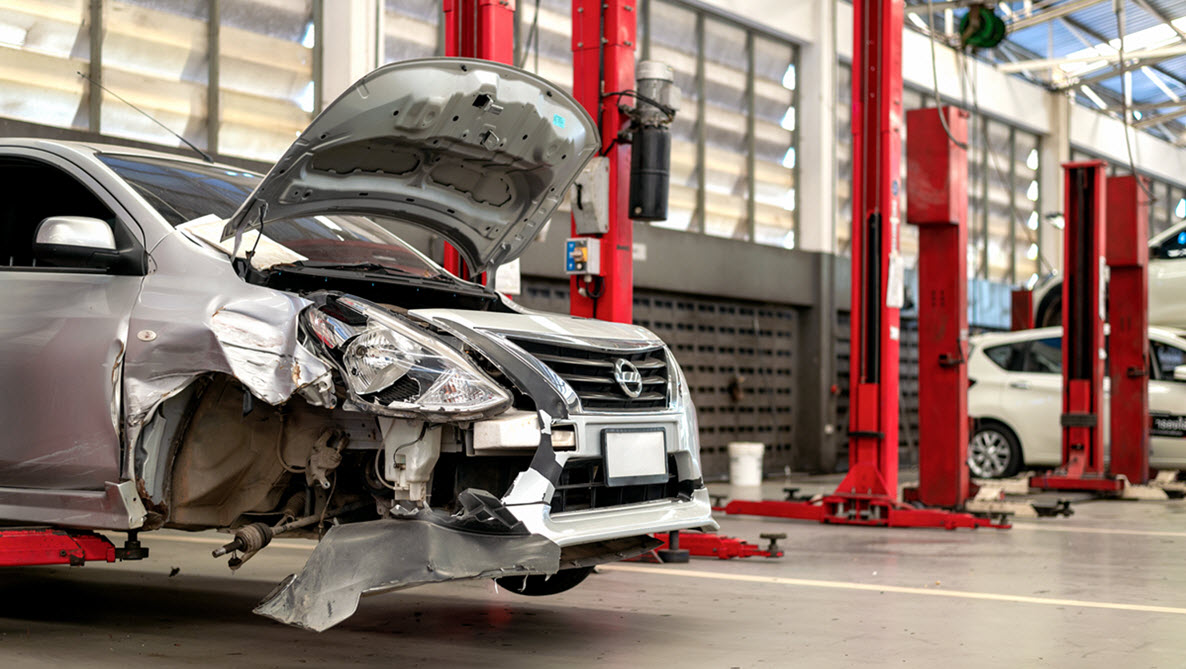
The market is changing, and for collision shops, that raises a lot of questions. Where is our work coming from, and what do we want to focus on moving forward? This is a good time to take a closer look at your sales mix.
Looking at 2026 so far, I think it is important to note that collisions are down by approximately 15% compared with 2020. This is an overall average, meaning that conditions in your local market may differ. However, the same trend can be observed from region to region.
Are you seeing it in your area?
That is not all. We are also seeing work providers and operators organize themselves somewhat differently. One trend is to streamline the networks used to assign work. Another is to focus on certified shops or those with specific capabilities. As a result, insurance work is shifting to fewer operators based on their capacity, regional considerations or specialized expertise.
If you are among the chosen shops, so be it, and congratulations! But if you feel you are losing traction when it comes to insurer-assigned work, you will have to ride the wave, if the situation has not yet become critical.
There is no secret. With collisions trending downward, there is less pie to go around. Now, those who control the pie are dividing it differently. If you cannot convince a work provider to prioritize your shop and you want your shop to serve insurers first, you will likely need to make changes to become a priority again. Those changes may involve capacity, expertise, reliability, customer service… In all honesty, there are many possible scenarios, and they are unique to your business.
There is also competition in your market. If some shops in your market are at full capacity while others are not, that is a good indication that, for better or worse, circumstances have left you somewhat or significantly on the sidelines.
So, what should you do? Make your shop more attractive to work providers or build relationships with new ones. If organizations are concentrating their resources, that means some collision centres are at full capacity, so the need for additional capacity is still there.
If you still have a long way to go in terms of certifications or capacity management, the hurdle may be too high in the short term. You will therefore need to ask yourself: Do I want to become a collision centre that work providers cannot easily overlook and invest the necessary effort, or do I want to change my strategy?
Building relationships with dealerships can be worthwhile, but they often need to work with certified shops.
What other options are there? You could enter into agreements with fleets, but keep in mind that the more specialized and newer the fleets are, the greater the role certifications will play in securing the work.
There is still some independent work available, so to speak, such as rental vehicles. Given the current economic climate, we are also seeing certain types of work make a comeback as a way to extend the life of used vehicles.
For some, it was already too late. They were not prepared, and costs forced them to close their doors. For others, it was profitability or succession. Given the circumstances, considering our location and the building occupied by our collision shop, is there a better business opportunity for us? These are major questions.
Now more than ever, however, a healthy shop needs to ride the wave and position itself to pursue the opportunities it wants to capture.
Progi is, of course, an important partner for collision shops. Contact us to learn more about our services.
_
Written by: Alexandre Rocheleau
Reviewed and translated by: Krystel Henley-Rocheleau